
There’s nothing glamorous about drain sludge. And yet, here you are, probably elbows-deep in denial while your sink sounds like it’s swallowing a brick.
Blocked drains are like bad neighbours—they show up uninvited, overstay their welcome, and usually bring something gross with them. You’re not alone. In Adelaide, drain drama is practically a rite of passage. From cracked clay pipes that predate most of our mortgages to roots that grow with the entitlement of a houseguest, this stuff is baked into the infrastructure. Literally.
Here’s the thing nobody tells you: the problem isn’t just what goes into your drain. It’s where you live, what’s growing near your walls, how your house was built, and—brace yourself—how SA Water quietly changed pressure zones a few years back. Yes, they did. And yes, it’s made a few suburbs the unofficial capital of gurgling sinks and phantom backflow.
This guide isn’t going to hand you the same tired tips about pouring hot water down your pipes or the old bicarb-and-vinegar routine. Please. If that actually worked, Adelaide plumbers would be extinct, and you wouldn’t be here, reading this with clenched teeth and a mysteriously damp bathroom floor.
No, this is the real stuff. The kind that tradespeople mention after they quote you, or that one weird neighbour knows because he spent four months trying to DIY his stormwater reroute (and failed). We're talking the unspoken truths—like how pasta water is silently murdering your u-bend, and why a fig tree out front probably means you’re one winter away from paying for an excavator.
By the end of this, you’ll know exactly what’s wrecking your drains, how to fix it (without nuking your pipes), and how to keep things flowing without weekly meltdowns. You’ll also learn a few things Adelaide council would rather you didn’t.
Let’s Not Pretend You Know the Real Cause
Grease, hair, “just old pipes”—yeah, you’ve heard all that. You’ve probably even blamed your kids or that one dodgy curry night. But here's the less charming bit: in Adelaide, blocked drains usually start underground, in silence, and over time, especially if you’re in the suburbs, still running on clay piping, which cracks under pressure and turns into a holiday home for tree roots.
Those leafy liquid ambers? Lovely up top, evil underneath. Their roots grow through your joints (the pipe kind, not the herbal kind), expand inside the line, and snag everything you wash down. Not just leaves. Stuff you’d rather not list.
Blocked drains often have nothing to do with what you did last weekend. They’re a slow-build problem that’s been waiting patiently while you blame your dishwasher.
Your House Might Be Guilty (Sorry)
You didn’t build it, but you’re dealing with it. Because old homes in Adelaide, particularly east of the city and down south, were piped by people who apparently thought slope was optional. A slight misalignment in grading means waste slows down, settles, and eventually hardens. That’s why you’re getting backflow on dry days.
If your stormwater and sewer lines are illegally connected (and yes, many are), that’s not just annoying. That’s also a fine waiting to happen. Councils started cracking down after water authorities got sick of dealing with 40-year-old band-aid jobs and home DIY pipe layouts.
And don’t think your roof plumber from 1998 is off the hook. Some setups still dump overflow from cooling systems directly into gully traps. Fun fact: They weren't designed for that.
The Fake Fixes That Make Things Worse
Boiling water, bicarb, vinegar. You’re not unclogging a drain. You’re baking a scone in your pipe. It’s not just ineffective—it's mildly ridiculous. And chemical drain cleaners? Good luck when you melt the lining off your PVC and the insurance adjuster casually reminds you that damage due to caustics isn’t covered.
Snakes, rods, coat hangers, and weird internet tools with brush ends? If you're not a plumber, you're guessing. And if you're guessing inside a pipe, you're scratching, snagging, or jamming things further down. Yes, even if it feels like it’s working.
Let’s be clear. The quickest way to turn a $150 job into a $1,200 dig-up is a misplaced jab with a metal wire through a pipe you can’t see.
The Stuff That Actually Works (And Won’t Get You Fined)
Start with the obvious—the plunger. But use the right one. Cup plungers are for sinks, while flanged ones are for toilets and floor drains. If the bath bubbles when you flush, it’s not a local blockage—it’s system-wide.
Enzyme-based drain cleaners don’t give instant gratification, but they do break down organic matter over time without wrecking your infrastructure. They work if you’re patient and realistic.
If you must do something more hands-on, check your external cleanout. Adelaide homes often have one tucked behind a shrub near the laundry wall. Open it slowly. If there's a pressure release, stop. That means you’ve got a main line blockage and should not proceed unless you want a sewage surprise.
Know When to Drop the Tools
Here’s the line you don’t cross: when multiple drains start acting weird. When your toilet gurgles after using the kitchen sink, or water rises in the shower every time you wash your hands.
That’s not a blockage anymore. That’s a system that’s choking somewhere far down. It might be collapsed pipework. It might be root mass. It could be years of sediment buildup from Adelaide’s hard water, which isn’t kind to internal pipe diameter.
You also shouldn’t smell anything once the water’s gone. If your drain smells like something’s been left to rot under the sun, you’ve likely got a dry trap, venting issue, or worse—a break in the line allowing sewer gas to back up.
Call someone. And not your neighbour’s cousin who “has a jetter.” A licensed pro who can CCTV the line and show you what’s actually going on.
How to Avoid All of This (Or at Least Delay It)
It’s not sexy, but the $12 drain strainer is the silent hero. Use it in your sink, use it in the shower, and empty it before it looks like a neglected compost heap.
Flush hot water and detergent weekly to keep fats from congealing. Don’t pour eggshells, pasta water, or coffee grounds down the sink. That sludge doesn’t go away. It builds up, settles, and waits for the right temperature to solidify.
If you’ve got big trees near your drainage lines, get annual root foaming done. It costs far less than pipe replacement and doesn’t require digging. And no, it’s not overkill. It’s probably overdue.
Book a camera inspection every couple of years, especially if your home was built before 1990. If you’ve never seen the inside of your sewer line, you’ve got less information than your plumber, and that should bother you.
Adelaide-Specific Weirdness You’re Probably Ignoring
Hills-based homes often have venting issues due to elevation changes, which means your blockages may not be blockages at all—just pressure imbalances.
Coastal areas like Henley or Seacliff see stormwater drains partially fill with sand, which doesn’t sound threatening until it rains and the water has nowhere to go.
Evaporative cooling units dump water every few hours during summer. If your overflow doesn’t drain properly, it feeds into gully traps and brings smells up with it. Some setups weren’t built for the load.
If your bathroom smells weird only in January, that might be why.
Wrap Up!
Blocked drains aren’t mysterious. They’re just annoyingly predictable—once you know what to look for. And frankly, you should. Because the next person who tells you to “just use vinegar” deserves to be handed the bill when the pipe bursts.
You're not just a reader now. You’re someone who knows that tree roots aren’t a maybe—they’re an inevitability. Illegal stormwater setups still exist in homes that have passed final inspection. And that blocked drains aren’t fixed—they’re managed.
That’s more than most know. And definitely more than your plumber wants you to know before quoting you $280 for 15 minutes and a jet rod.
Use it well.
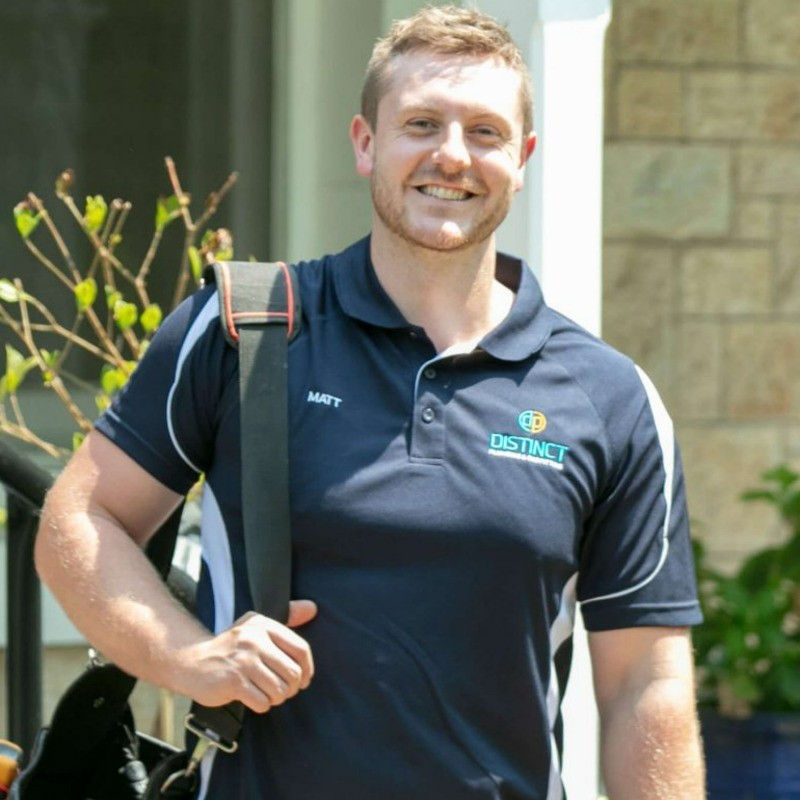
Matthew Johnson
Matthew Johnson is the Owner, Director, and Master Plumber at Distinct Plumbing & Gas Fitting, bringing over a decade of hands-on plumbing experience to residential and commercial clients across Adelaide. He founded the business seven years ago with a clear mission: to deliver reliable, high-quality plumbing solutions backed by integrity and exceptional service.
Specialising in residential and maintenance plumbing, Matthew and his team handle everything from emergency repairs and pipe installations to hot water system upgrades, blocked drains, and advanced drain relining. Known for his practical expertise and problem-solving approach, Matthew ensures every project is completed to the highest standard, right the first time.